

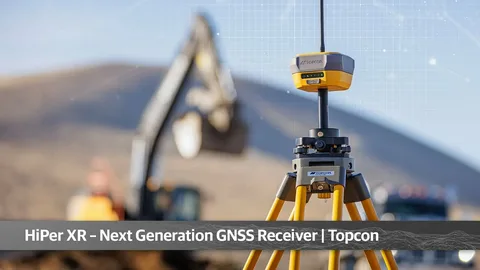
Global Navigation Satellite System (GNSS) positioning is a cornerstone of modern geospatial engineering, revolutionizing how we measure and map the world around us. GNSS refers to a network of satellites that provides accurate location data anywhere on Earth, enabling precise positioning and navigation. In the context of geospatial engineering, gnss positioning system plays a critical role in a variety of applications, from land surveying to infrastructure development and environmental monitoring. This article explores the key applications of GNSS positioning in geospatial engineering.
What is GNSS Positioning?
GNSS is a term that encompasses several satellite-based systems, including the United States’ GPS (Global Positioning System), Russia’s GLONASS, Europe’s Galileo, and China’s BeiDou. These systems provide real-time location and time information, which can be accessed by GNSS receivers on the ground. By triangulating signals from multiple satellites, GNSS receivers can determine precise coordinates (latitude, longitude, and altitude) anywhere on Earth with remarkable accuracy.
In geospatial engineering, GNSS positioning is essential for conducting surveys, mapping, and creating geospatial data that inform decision-making in various sectors such as construction, transportation, and environmental management.
Key Applications of GNSS Positioning in Geospatial Engineering
1. Land Surveying and Mapping
One of the most fundamental applications of GNSS positioning is in land surveying and mapping. Traditional methods of land measurement, such as using tapes and theodolites, were time-consuming and prone to human error. GNSS technology has dramatically improved the speed, accuracy, and efficiency of surveying tasks.
Surveyors now rely on GNSS positioning to collect high-precision data for creating topographic maps, boundary surveys, and cadastral surveys. The ability to obtain real-time coordinates with centimeter-level accuracy is particularly valuable in projects involving large land areas or difficult-to-reach locations.
2. Infrastructure Development and Construction
GNSS positioning plays a vital role in the planning and construction of infrastructure projects such as roads, bridges, and buildings. Accurate location data is essential for ensuring that construction projects are executed according to design specifications.
In large-scale construction projects, GNSS-enabled machines, such as excavators and bulldozers, can be equipped with precision guidance systems to improve operational efficiency. These systems provide real-time positioning data, allowing machines to work with high accuracy and reduce human error. Furthermore, GNSS helps streamline workflows by allowing for real-time project monitoring and data sharing, making it an invaluable tool in modern construction.
3. Geospatial Data Collection for Environmental Monitoring
GNSS positioning is increasingly used in environmental monitoring, especially for tracking changes in the natural landscape and managing natural resources. Accurate geospatial data is essential for monitoring phenomena such as land subsidence, coastal erosion, and deforestation.
For example, GNSS positioning can be used to monitor the movement of tectonic plates in seismic regions or to track glacial retreat. In agriculture, GNSS helps in precision farming by allowing for efficient land management, irrigation planning, and soil analysis.
4. Transportation and Autonomous Vehicles
GNSS positioning is also integral to the transportation sector, providing real-time navigation for vehicles, planes, ships, and trains. With GNSS, drivers and pilots can follow optimized routes, avoid traffic, and ensure safety with accurate navigation.
In the context of autonomous vehicles, GNSS plays a critical role in determining the vehicle’s position on the road network. When combined with other sensor technologies, such as LiDAR and cameras, GNSS positioning allows autonomous vehicles to navigate and make decisions in real-time, ensuring a high level of safety and reliability.
The Future of GNSS Positioning in Geospatial Engineering
As technology continues to evolve, GNSS positioning is expected to become even more accurate and versatile. The integration of new systems, like the upcoming Galileo 2.0, promises to offer even greater precision and reliability, especially in urban canyons and other challenging environments where GNSS signals can be obstructed.
In addition, the use of real-time kinematic (RTK) and precise point positioning (PPP) techniques is already advancing the level of accuracy available to professionals in geospatial engineering. These advancements will continue to open up new possibilities for precise mapping, navigation, and monitoring across a wide range of industries.
Conclusion
GNSS positioning has proven to be an indispensable tool in geospatial engineering, with applications spanning land surveying, infrastructure development, environmental monitoring, and transportation. Its precision and versatility have made it essential for modern engineering projects and decision-making processes. As GNSS technology continues to evolve, its applications are expected to expand, further shaping the future of geospatial engineering.
